
Helena Costa
Mariana Oliveira
Thiago Allis
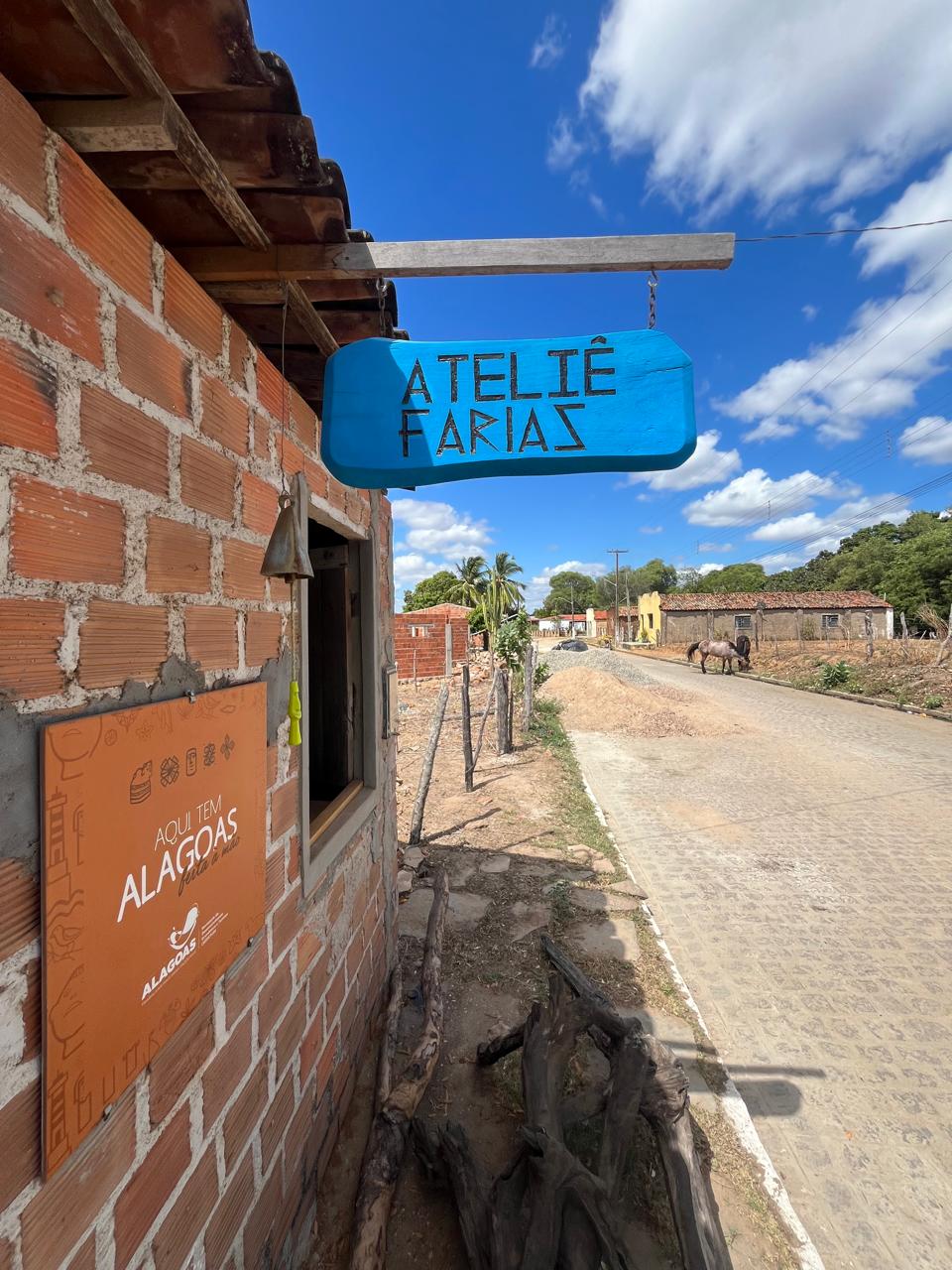
Ilha do Ferro is a charm. A small village in Alagoas, which neither shrinks nor stretches between the hinterland and Velho Chico. On one side, Alagoas lands. On the other, Sergipe. Its population of about 500 people has water, ubiquitous art, and delicious food. Its people are friendly and emanate some magic in the way time passes. There it seems that we ourselves are more grounded and, at the same time, connected with something that transcends.
The São Francisco River is an entity that cuts through the Brazilian core in its most arid portions. That is why he is so revered in affections, in commerce, in the structuring of life. A stubborn river, which rises in the central massif of the country, and decides to flow north, draining between lowlands and walls, until it reaches the simple sands of the Atlantic coast. Each stretch dialogues and produces a diverse culture, marked by the relationship with the waters and the flows that they have allowed for millennia.
A visit to Ilha do Ferro - which, technically, is not an island, but a backwater in the final third of the São Francisco River - transforms. It transforms like almost all the good trips that attentive and curious hikers take. But it is also worrying: what role and what consequences will tourism have in the near future of this very special place?
In this text, we bring together three Tourism professionals with diverse looks, experiences and performances, passionate about popular art and everything beautiful that Brazil offers. And we know that it is not little - but not always available logistically, symbolically and even financially. In common, we share the impact and reflections that a trip to Ilha do Ferro caused on us. We wanted to share these impressions, taking the risk of deviating from the superficialities of a quick visit. But we think it's worth it: the story can be food for reflection for those who - like us - revere a Brazil that deserves to be lived under the precepts of responsible tourism.
Modestly, we want to organize some thoughts of those who found this place so unique, authentic and capable of raising questions for those who work in tourism development, creative economy, mobility of people, things and ideas, sustainability and experiences of all kinds.
Mariana:
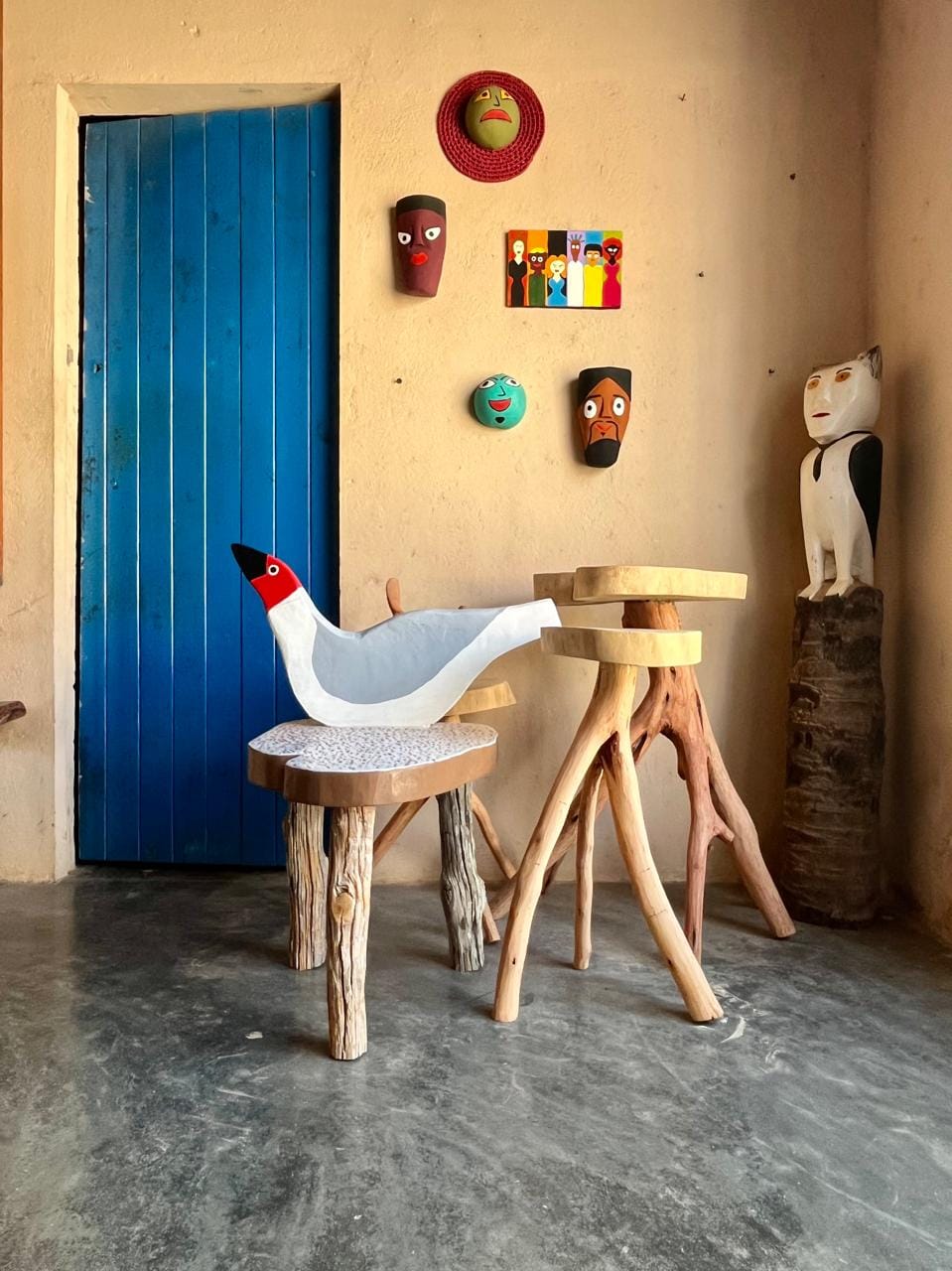
To arrive at Ilha do Ferro is to cross a threshold where time embroiders the ties with the line of presence and coexistence. People call us by name, introduce families, share stories like someone who passes the afternoon brewed coffee. Even the dogs of the streets have names — and they belong to everyone. Life here pulsates in the rhythm of the river and the hands that, sculpting wood, transform what the land gives into living art.
In everyday life, wide smiles; in the craft, pride and calm. It is in this scenario that tourism on Ilha do Ferro finds meaning: those who arrive come to learn, know and feel, not to shape. The greatest value is to be what you are, without exchanging it for an idea of "better" that comes from outside.
Ilha do Ferro teaches us that hospitality does not fit into manuals, nor does belonging rise with recipes. It is necessary to listen before teaching, to walk before guiding, to feel before transforming.
And, little by little, one realizes: true luxury is not a dish with a name in French, but the smell of Bruna's or Bia's beans, the lightness of Dona Irene, the taste of Pedro's pizza, the laughter of children playing ball by the river. In this contrast, the invitation opens: to rethink the way we touch the places — and the lives — through which we pass.
Helena:
It seems that we came back from Ilha do Ferro more connected to be more artistic, to bring beautiful and unique things to the world. I felt there a deep stillness, mixed with a creative restlessness. A special place, no doubt. That doesn't mean I want to convince you to go there. There are several materials already available that will do this with you without much effort.
Because I work with tourism - having seen a lot in the last 20 years - in addition to having training, researching the subject, working in the area and being aware of its burdens and bonuses, I really prefer that it doesn't become one hit . We have lived long enough to see Jericoacoara, Pirenópolis, Pipa and we don't want to make the same mistakes. I just want its creative and community value not to be lost. Great delicacy is required when stepping on that land.
The village seems far away, it seems unreachable. But it is not. It seems that it has remained with few changes in the way of life in the last 100 years, but I am sure that those who knew it 10 years ago would already notice many differences. I heard stories of what it was like – and how it should continue to be.
My biggest concerns when leaving there were how this village will preserve, in the coming decades, its characteristics that made it so unique, and still follow the dynamics of the success of its plays and its masters? How will they continue to extract wood in order to sustain the crafts they have created, above all, from it?
The answer to this lies in changing a centuries-old practice of being a wood collector - now it is time to start another conduct, to replant, to regenerate - as suggested by Yang, a brilliant young leader of the artisans' association. This is the legacy he would like to leave.
How to maintain voluminous deliveries to the big cities - I myself witnessed orders of 150 pieces of a single model in an order for São Paulo - and maintain a calm life there in that part of the world? How would it be possible to expand the gains - in multiple dimensions - for the artists and their families, while valuing their know-how, as well as the genuine coexistence with those who decide to visit the Island? How can we prevent other middlemen from coming to market a rich tourist experience that is there in the studios, just waiting for a design and a perception of its intrinsic value?
Something that bothers me and arouses my curiosity is the commercial relationship with distributors. In online searches, I found pieces sold in specialized stores for values from 200 to 330 reais. This same piece costs 50 reais if bought directly from the artist's hand. This generates a discomfort that did not seem to affect any of the artists I asked about the relationship. This question moves me to further investigations, but it feels more like mine than theirs...
In any case, I leave provoked by a dream: to live longer there, and to work alongside them to co-create experiences in the studios, respecting the time and logic of each artist, who could sell more than an art object, but an artistic and formative experience of great value to visitors - on a scale that respects the life that is lived there.
Thiago:
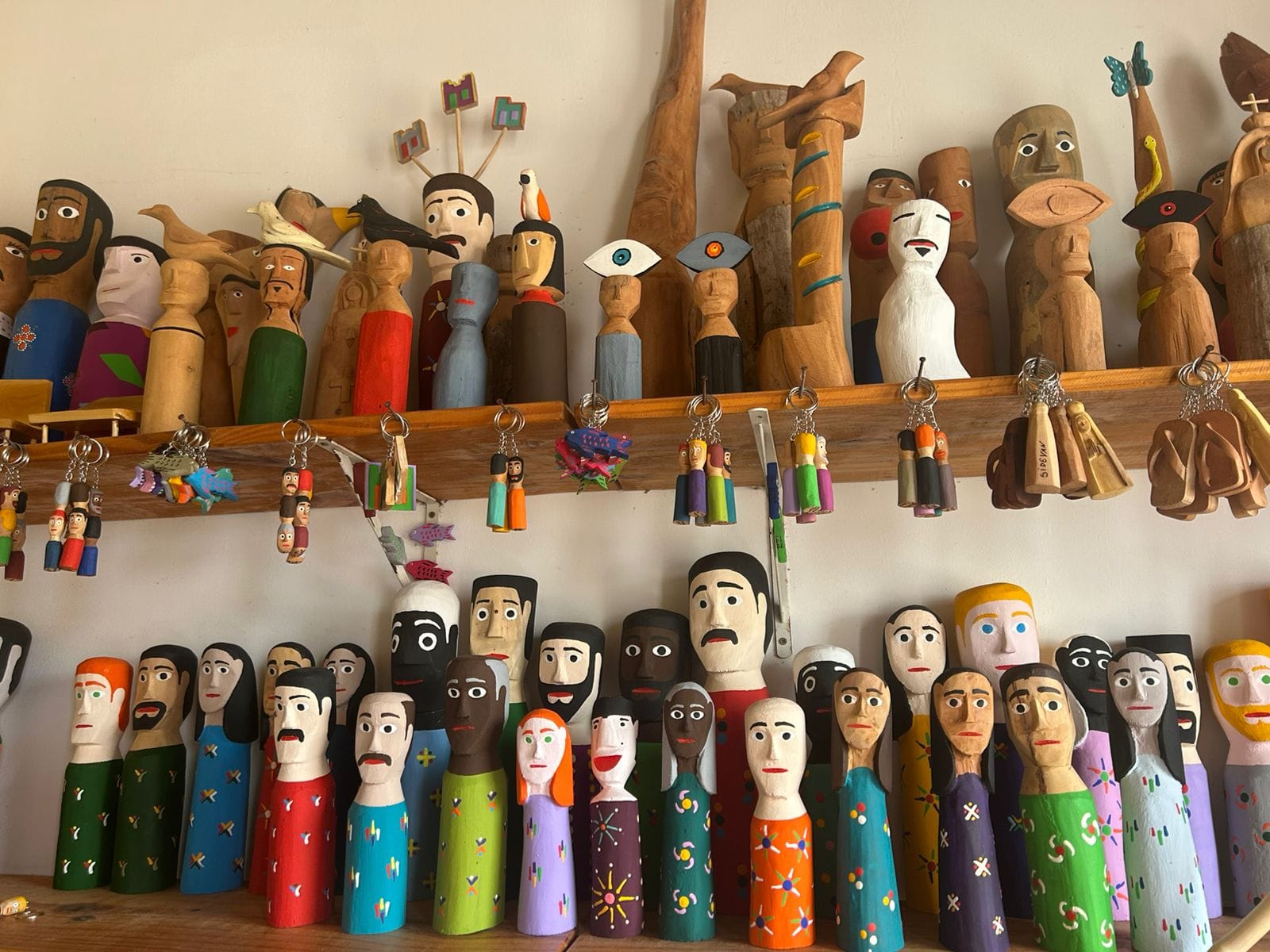
Ilha do Ferro, part of the municipality of Pão de Açúcar, on the edge of Alagoas, has been gaining visibility, mainly due to the circulation of art that travels through social networks, travelers' suitcases and bags, store freight, as well as by those who come looking to experience, see, feel the essence of this creative environment.
One of the reflections I made about this place and what is produced there concerns the many circuits that pieces of popular art draw around the world - from the almost ancestral aesthetic conception to the sale and landing in distant homes.
Of course, this subject is not new when discussing art trade, the so-called popular. Here, polychrome wooden objects are clothed with an ambivalence: on the one hand, the opportunity to experience culture in loco, visiting a village that little by little enters the map of unconventional tourism possibilities; and of course, this includes symbolically and economically consuming artistic creation from the bowels of Brazil; on the other, a growing drain of pieces, which, because they enter the repertoire of taste (or fashion) of urban and distant middle classes, feed the portfolios of commercial intermediaries, to order, acquire, transport and market them widely (especially online)
In any case, the Iron Island is set in motion itself, it extends its borders beyond Velho Chico. To a large extent, the curious who arrive - like us! - are active agents of this mobilization of a place that, until not so long ago, few people would have been able to locate on a map. All of this sharpens the palate of a mobility researcher. The purchase in loco It dialogues a lot with this vision of mobilities that I have been working on.
I start from the theoretical-methodological assumption: following things, in their materiality and relationships, helps us to understand contemporary phenomena – including tourism.
By scrutinizing the path of things, we have the chance to understand the dynamics of facts in all their dimensions, from other perspectives and connections: of the individuals linked to them, of the territorial processes, of the economic dynamics, of the symbolic dimensions, as a function of that movement, of the movement of things.
This is not limited to the perspective of an economic study, how this production chain is built, how value is added between the origin of the raw material and its consumption at the other end. This is interesting and elucidates certain nuances, but, in the way the study of mobilities suggests, it is mainly about identifying the points of these chains in which tourist experiences are produced.
But let's go back to Iron Island. These pieces are produced there, they are gradually now moving in new circuits of national and, possibly, even international valorization. This new web of relationships is structured from several paths: media projection, circulation on networks, promotion of states, people who visit and tell, influencers, article in Gol's magazine, etc.
This Ilha do Ferro projection feeds the construction of an imaginary, predominantly associated with the aesthetics and materiality of the colored wooden pieces. With this, these products circulate symbolically - then people either want to buy in the online store, in the gallery, or they want to go there to buy in person. Desires are created in the gaps and links of this symbolic and material circulation. In some cases, this generates a demand for intermediaries to make the pieces available in physical or virtual stores, and more and more people consume Ilha do Ferro through the purchase of that art, but are not necessarily interested or willing to live locally. In other cases, these circulations produce a curiosity of other groups of people to go there because they have a sensitivity and other stimuli to know the context of production, to live the place, to know the artisan, to have experience of the São Francisco, and, finally, to buy in loco . In other words, it is tourism associated with a materialized and territorialized cultural production, rooted on the banks of the river-life.
Here we have a challenging crossroads: if, on the one hand, supplying distant and voluminous markets (in online sales or through middlemen) guarantees regular and possibly higher revenue, on the other hand, this can generate quantitative production pressure and, the more people are willing to know the village, generate frustration in the event of shortages (now directed to commercial deliveries on a scale - for consumers who have the sensitivity to know, vaguely, no more than the name of the place). In a sense, fame – and even recognition – can result in an autophagy of the intrinsic advantages of this inspired and inspiring place, undermining unique potentialities. Who and how will balance this rule is a question that is primarily up to that same community.
More than theoretical quibbles, these less obvious dimensions of mobilities can serve as a guide for readings of tourist practices linked to a cultural production in a given territory and, based on this, structure platforms for action for local development.
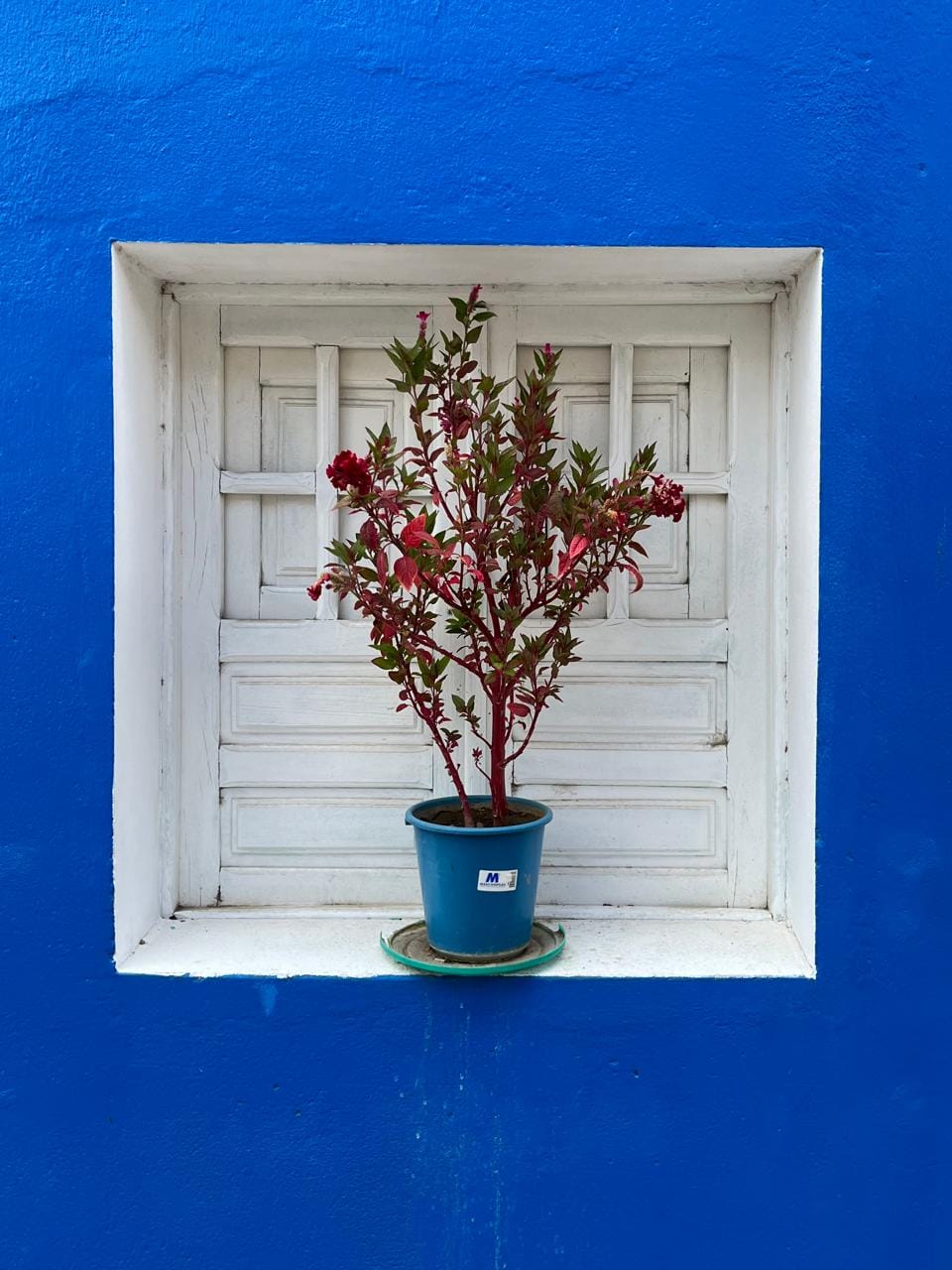
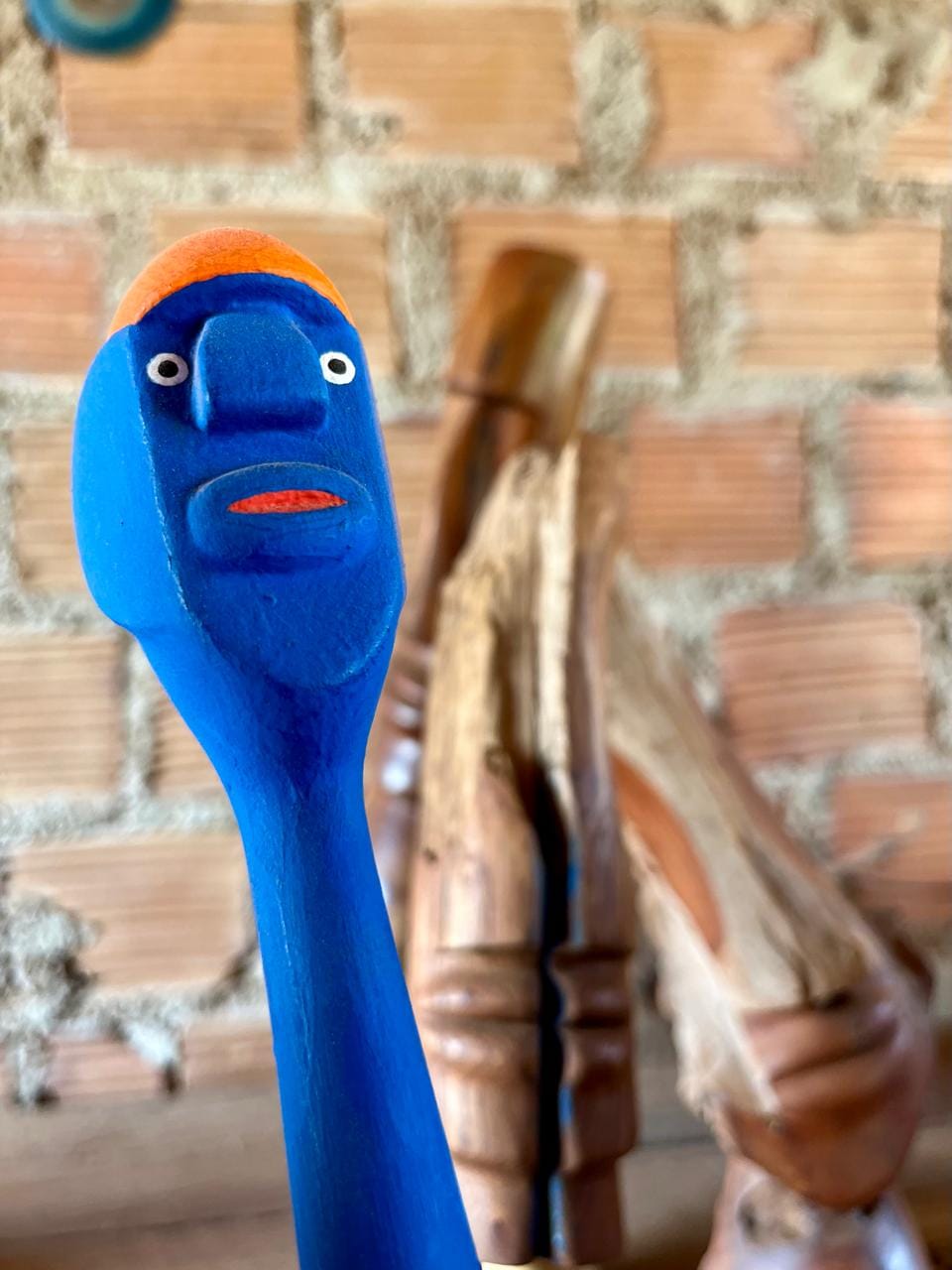
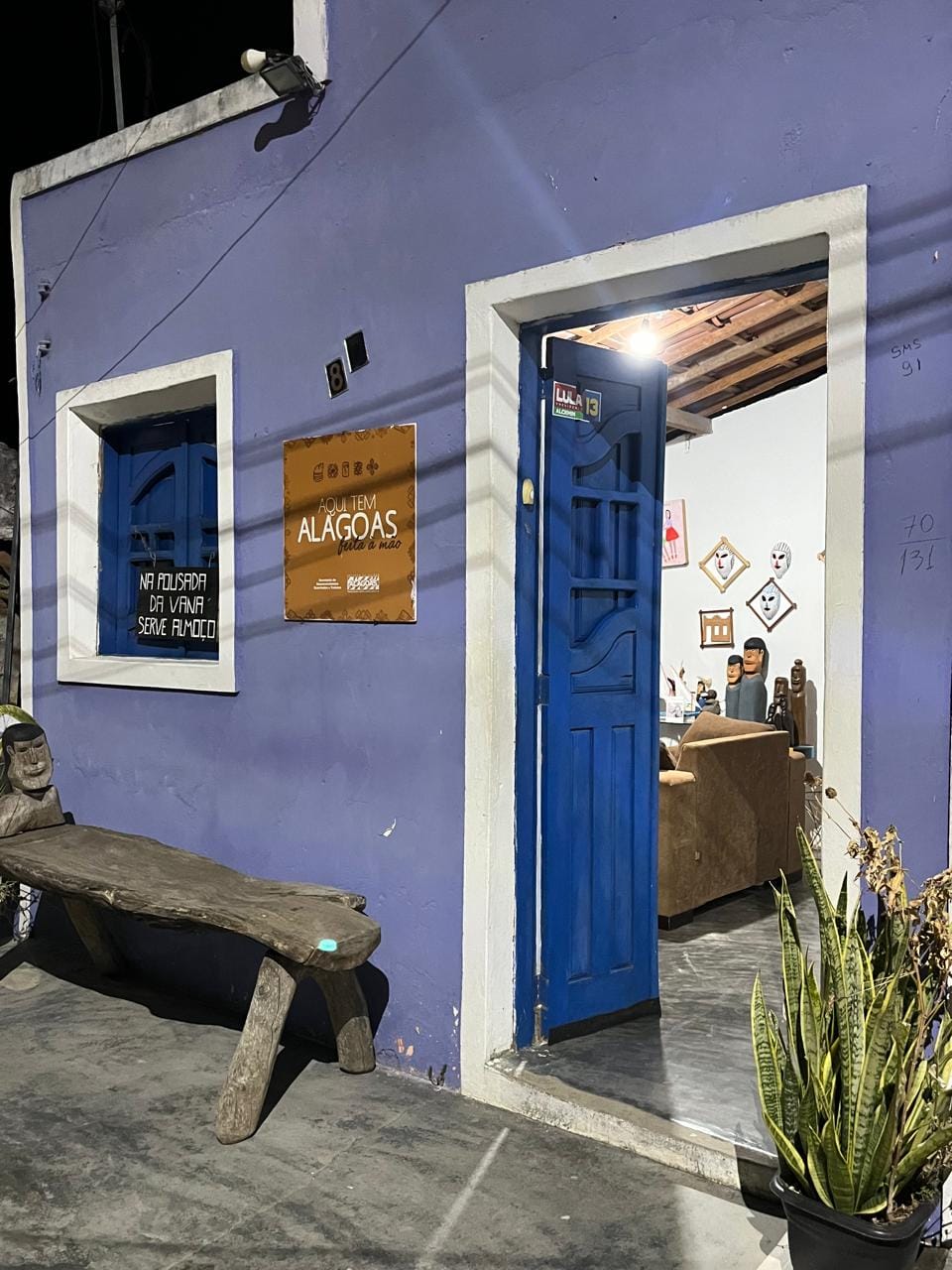
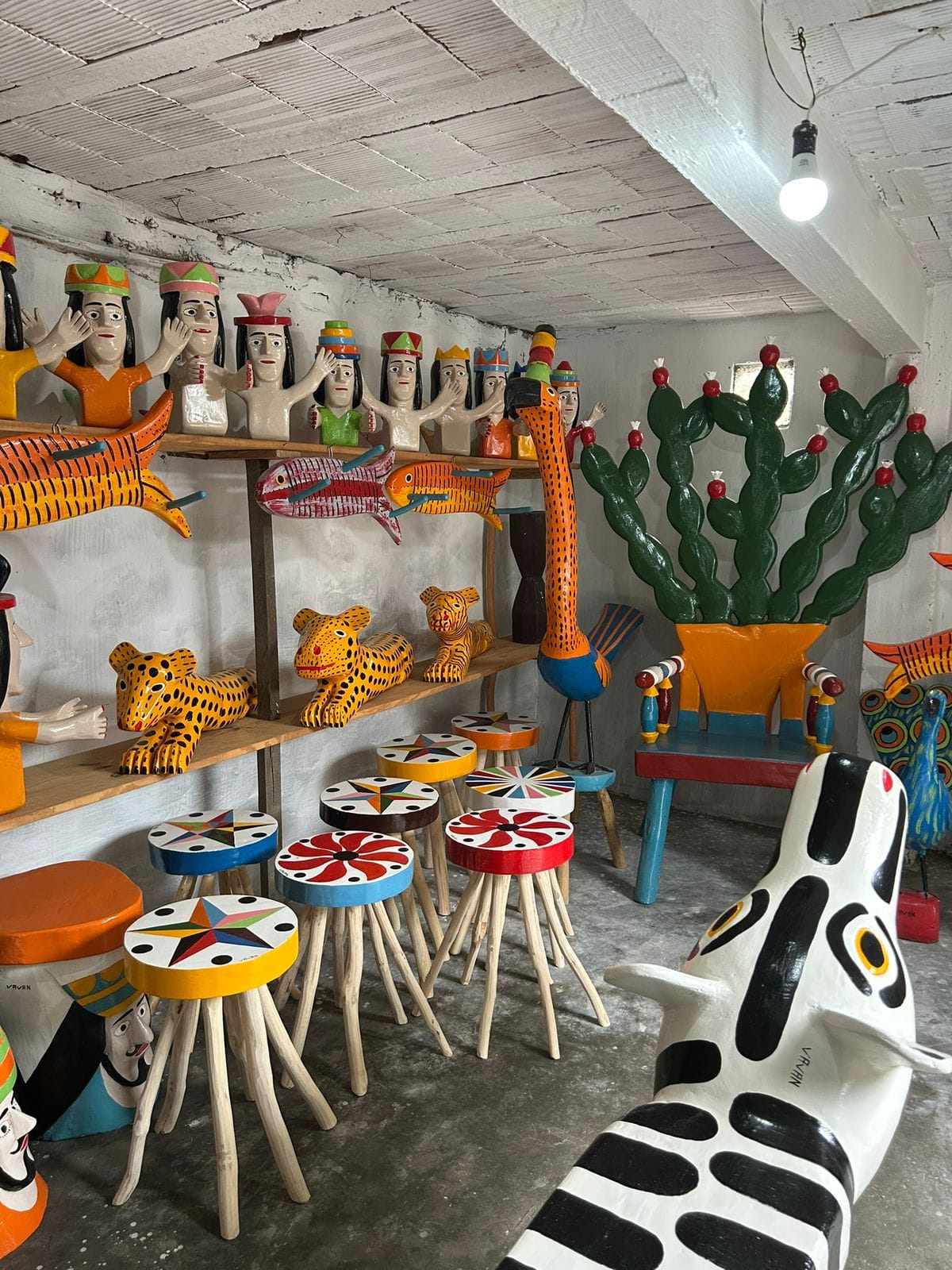
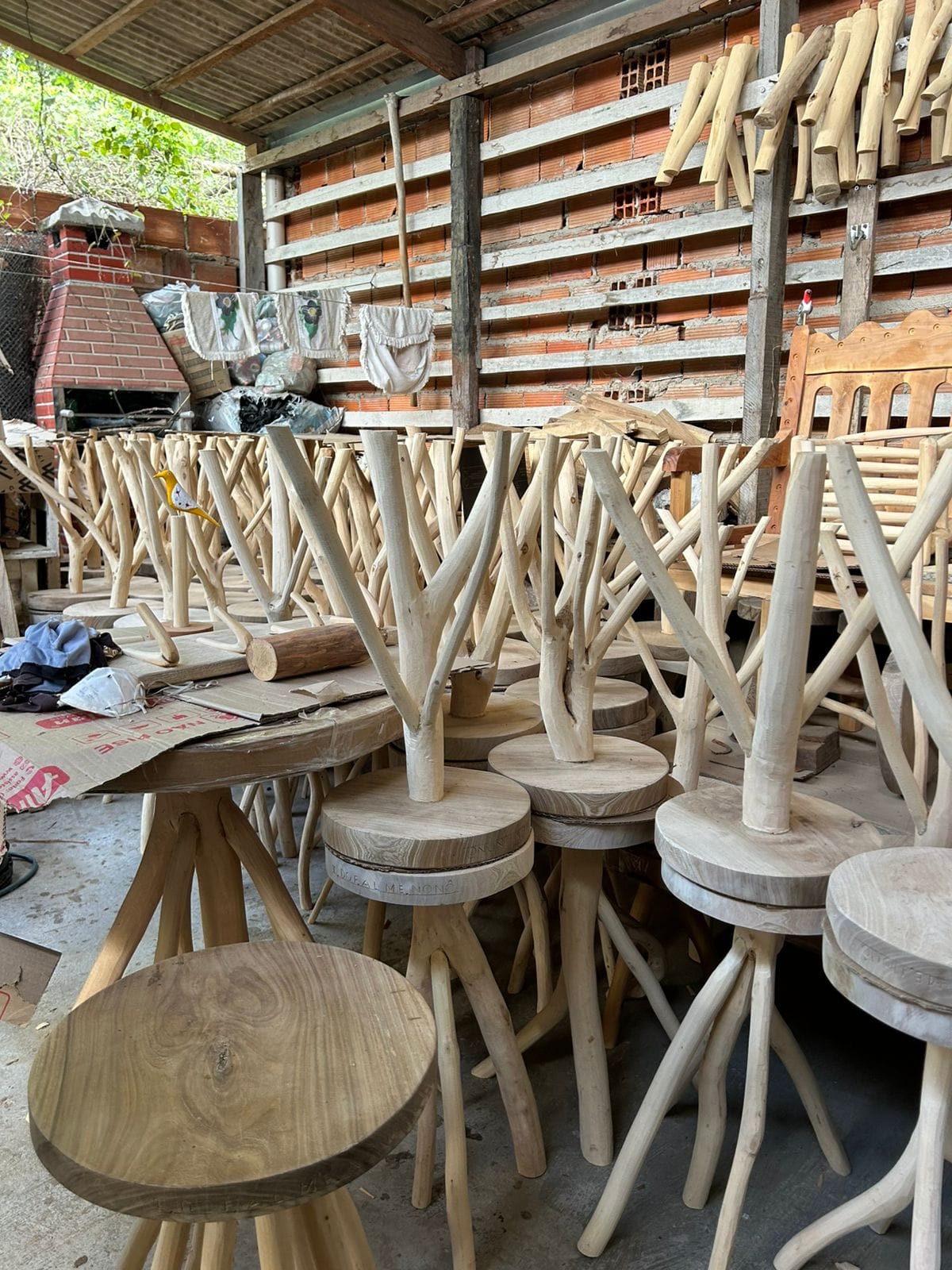
Images of Ilha do Ferro. Top row: Thiago Allis. Bottom row: Helena Costa
About Us
Helena Costa is from Brasilia, where she is a professor of Tourism and Administration at the University of Brasilia, working in research at LETS, projects and public policies in tourism and sustainability.
Mariana Oliveira is an architect and has a bachelor's degree in Tourism, lives in Recife and has experience in designing extremely peculiar itineraries and experiences throughout Brazil.
Thiago Allis is a professor and researcher in Tourism at EACH USP, and is dedicated, along with many other engaged people, to the study of mobility and tourism at Mobtur.
Links MobTur
To learn more:
Stories from Home Iron Island
Iron Island Miniguide The Summer Hunter